
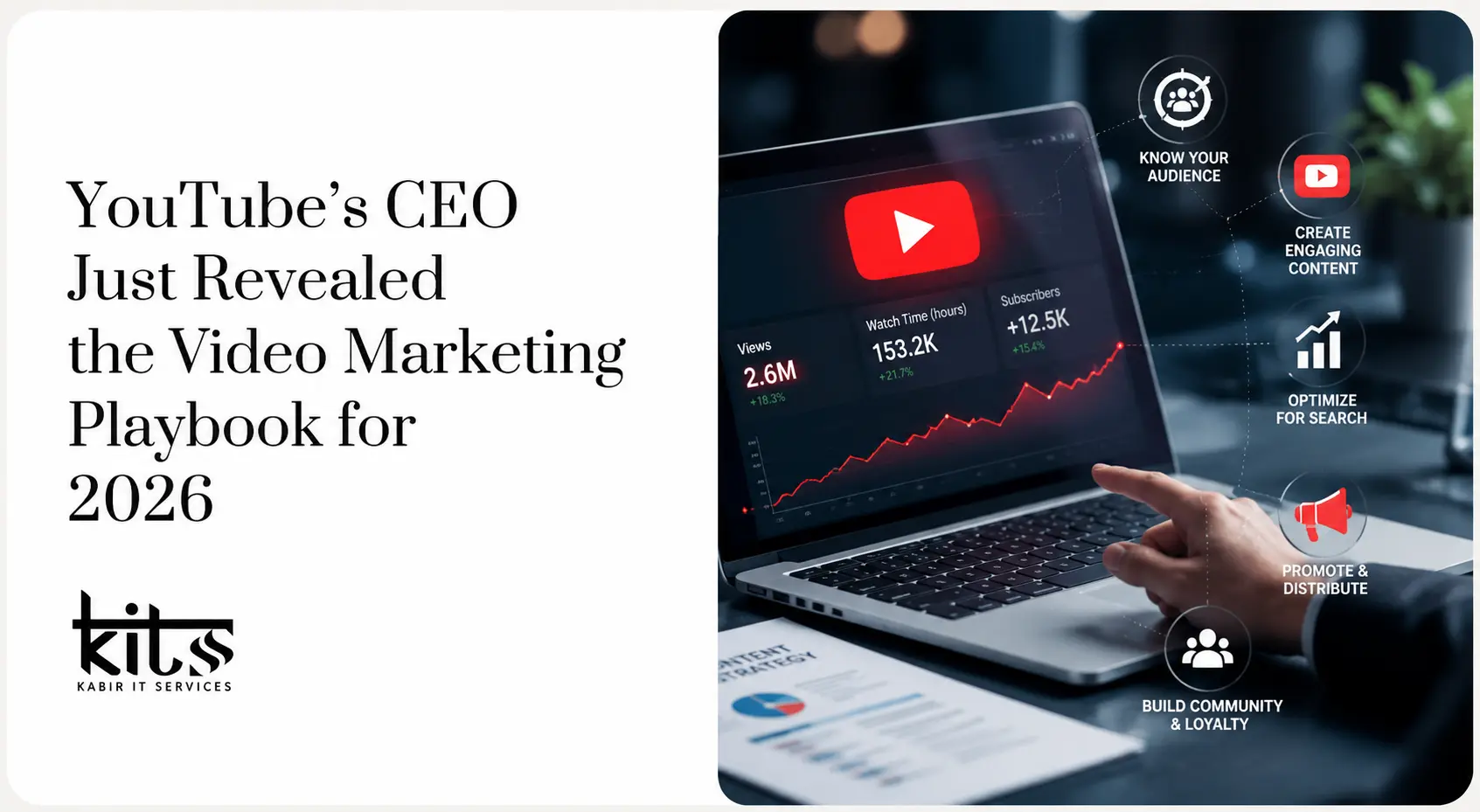
YouTube's CEO Just Revealed the Video Marketing Playbook for 2026
Every January, YouTube CEO Neal Mohan publishes a letter to creators outlining where the platform is headed for the year. Most years, it reads like a routine product update. This year’s letter is different – it reads more like a strategic manifesto, with Mohan describing YouTube as the epicenter of culture and positioning creators as builders of the media companies of the future. For marketers, that shift in tone signals a shift in strategy.
YouTube Isn’t Just a Video Platform Anymore
The letter makes one thing clear: YouTube no longer sees itself as a single-purpose channel. It’s simultaneously functioning as a global television network, a creator marketplace, a commerce platform, and an AI-powered discovery engine. That means the old playbook – upload a video, hope the algorithm favors it – is no longer enough. Each of these identities carries different implications for SEOs, content marketers, and brand teams building out 2026 plans.
The Four Priorities Driving YouTube’s 2026 Strategy
Mohan’s letter organizes the platform’s direction around four core themes: reinventing entertainment, building the best place for kids and teens, powering the creator economy, and supercharging and safeguarding creativity.
For brands, the practical takeaway is this: YouTube is investing in creators as media businesses, not just content producers. If your video strategy still treats YouTube as a place to park ads, you’re behind the curve.
What This Means for Marketers in 2026
A few shifts worth building into your strategy this year:
- Move past vanity metrics. Views alone don’t tell the full story anymore. It’s more useful to track whether watch time is increasing, whether brand lift studies show movement, and whether views are actually converting.
- Let AI handle production, not strategy. AI tools are cutting production time significantly, which frees up bandwidth to focus on positioning, audience targeting, and message-market fit rather than manual editing.
- Think problem-first, not brand-first. The platform continues to reward content that directly answers what your audience is searching for – “how to fix,” “best option for,” “how to choose” – regardless of channel size or subscriber count.
- Build for both extremes. The strongest-performing content strategy right now sits at two ends of a barbell: short-form for discovery and reach, long-form for depth and consideration-stage buyers.
- Repurpose relentlessly. One video should be feeding your Shorts, Reels, blog content, and carousel graphics – not living in isolation on one platform.
The Bottom Line
YouTube’s CEO isn’t just talking to creators with this letter – he’s telling marketers where the platform is putting its weight in 2026. The brands that treat YouTube as an ecosystem, not a feed, are the ones positioned to benefit from where the algorithm, AI discovery, and monetization tools are all heading.