
The Home Service Marketing Funnel: From Google Search to a Paying Customer
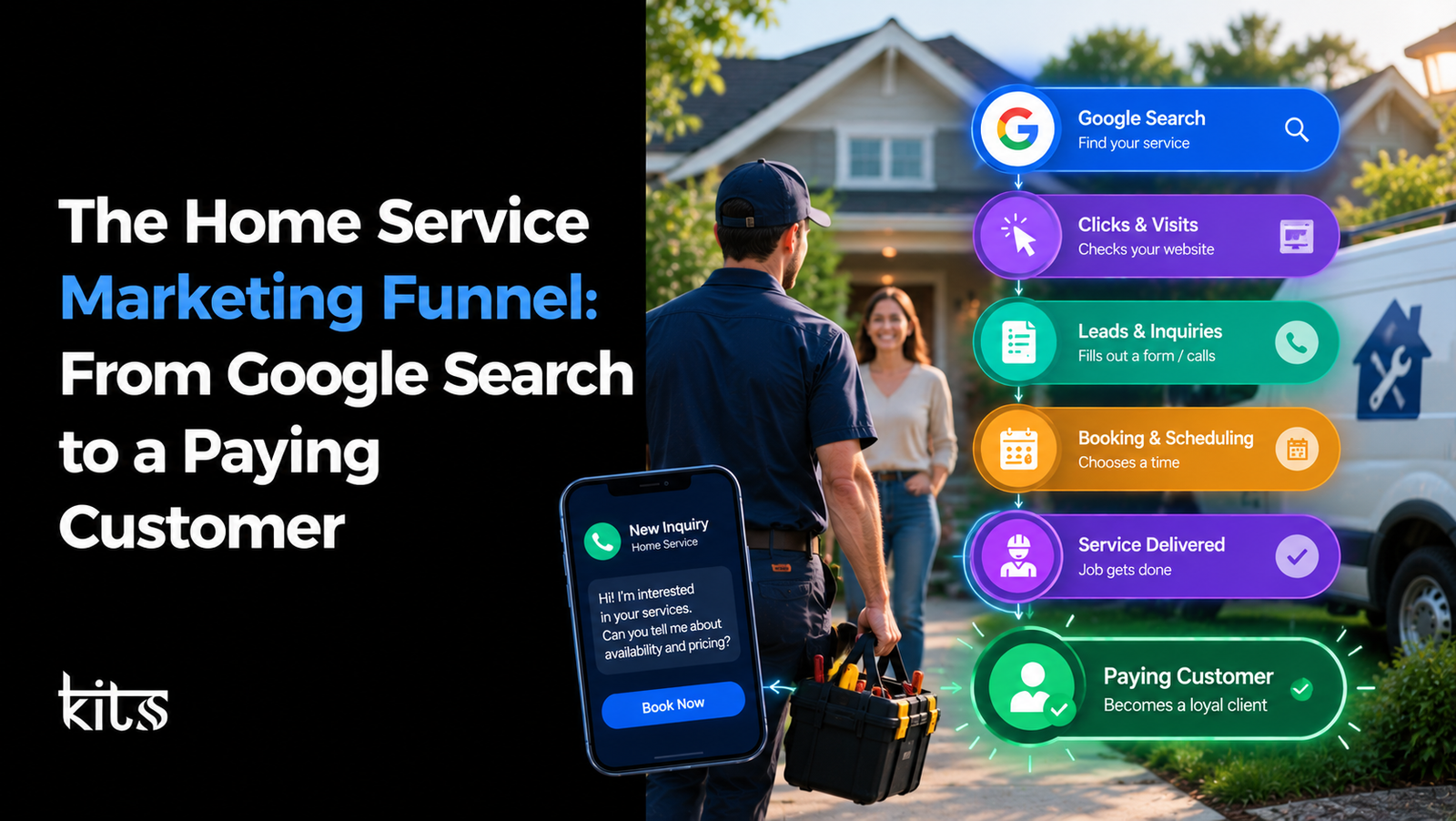
Getting to the top of Google is great, but let’s be honest it’s only the start. If you’re in the home services business, the real question is: how do you turn those online searches into actual paying customers?
That’s where a smart home service marketing funnel comes in. With the right mix of local SEO, web design, reviews, a good CRM, and marketing automation, you’re not just getting found you’re getting booked, paid, and (hopefully) earning repeat business.
So, who actually needs this kind of marketing funnel? Pretty much anyone offering services at people’s homes or businesses. Cleaning crews shooting for steady gigs, HVAC folks dealing with the rush of hot summers or freezing winters, plumbers, electricians, landscapers, pest control experts, roofers, painters, handymen the list goes on.
Despite the differences in what you do, most of you are after the same thing: turn someone looking for help into a customer, make them happy, and get them to call again or refer a friend.
The problem? Too often, marketing and day-to-day operations don’t work together. You pour money into ads. Leads pop up. But if those leads get lost, ignored, or handled inconsistently, you’re leaving money on the table.
That’s exactly why a marketing funnel, backed by a solid system, is so valuable. It connects the dots from discovery to booking to repeat business.
Let’s break down how this all works, piece by piece.
What’s a Home Service Marketing Funnel, Anyway?
Think of the funnel as the journey your customer takes from first spotting your business online to booking a job, staying loyal, and (ideally) telling others about you. The funnel ties together your marketing, sales, communications, and customer care into one process, so nobody falls through the cracks.
Look at a commercial cleaning company, for example. A property manager Googles “office cleaners near me,” finds your website, fills out a form for a quote, you set up an inspection, send the proposal, follow up, and close the deal. Instead of treating these steps separately, you weave them together into a smooth path that’s easy for the customer and easy for your team to manage.
Most home service marketing funnels break down like this:
- Discovery: Potential customers find you
- Consideration: They check out your reviews, your site, and size you up.
- Enquiry: Somebody calls, emails, or fills out that form.
- Conversion: You respond quickly and close the deal.
- Retention: You land repeat business and encourage ongoing relationships.
- Referral: Happy customers recommend you or leave glowing reviews.
Don’t ignore any one stage. If you do, there’s a good chance you’ll lose potential business before it even starts.
Stage 1: Helping Local People Find Your Business
Here’s where it all begins. If no one knows you exist when their pipes burst or they need their office cleaned, you’re out of the running. People go to Google, look at Maps, browse directories, or ask on social media so you’ve got to be ready everywhere it counts.
Get Your Google Business Profile Right
This is step one. Fill it out completely: name, phone, website, service areas, hours, categories, description, photos, up-to-date services, responses to reviews the works. Keep the info honest and avoid any temptations to fudge locations or details.Follow Google’s recommendations for improving local search visibility by keeping your business information accurate, complete, and up to date.
Build Service Pages That Actually Help
Don’t stuff every service you offer onto a single, cluttered page. Create individual pages for each main service so Google and your future customers get the full story. If you’re a cleaner, for example, split up commercial, residential, deep cleans, regular contracts, etc. Make it clear who it’s for, what it solves, and how to get in touch.
Match What Locals Are Searching For
Talk about your services the way your customers will. Use phrases like “emergency plumber in [your city]” or “lawn care near [area].” Weave in local terms naturally. Don’t try to spam your site with endless “cut and paste” city pages it’s lazy, and it doesn’t work anymore.
Use Paid Ads Where They Make Sense
Ads can fill in the gaps while your SEO kicks in or help target people looking for high-value services. But don’t just send clicks to your homepage. Point them to the right service page, track every call and form, and review which ads actually bring in customers, not just clicks. Google Search ads can help your business reach people actively searching for relevant services.
The goal isn’t just numbers on a dashboard it’s getting people to take action and become real customers.
Stage 2: Turning Website Visitors Into Real Leads
Visitors are nice, but scheduled jobs pay the bills. When someone lands on your site, you have a narrow window to prove you’re the right fit.
Be Clear About What You Do
People need to quickly see what you offer, who you help, where you work, and why you’re better. Cut the fluff. If you’re a commercial cleaner, say so. Lay out the types of buildings you service, how to get in touch, and what makes your crew the best.
Make Calls-to-Action Obvious
Don’t make people hunt for what to do next. Buttons like “Request a Free Quote” or “Book Your Assessment” drive results. Match the call-to-action to the situation: emergencies need a phone call button, while regular jobs might suit an online form.
Build Trust—Show Proof
Don’t just tell show. Real photos, honest reviews, testimonials, certifications, and guarantees build credibility fast. If you’ve handled a complex job, share that story (without making stuff up). Never fake reviews or slap up random logos just to look bigger.
Keep Forms Short and Sweet
People hate long forms, especially on mobile devices. Stick to the basics you can always get finer details later. Name, contact info, and a quick note about the job are enough to get started. Most importantly, let people know what happens next after they hit “submit.”
Stage 3: Capture and Organize Every Lead
Every enquiry matters, but only if someone follows up in time. With calls, emails, texts, social DMs, and website forms all coming in, things get messy fast. Spreadsheets and sticky notes just don’t cut it. That’s what a CRM is for it keeps your leads and customer data in one place.
What Should a Home Service CRM Actually Track?
A CRM gives your team a central place to manage leads and customer interactions.
For a home service business, a basic pipeline could look like this:
| Pipeline stage | What it means |
|---|---|
| New enquiry | A potential customer has contacted your business. |
| Contact attempted | Your team has tried to reach the lead. |
| Qualified lead | The service, location, and requirements are suitable. |
| Quote or estimate sent | The customer has received pricing or a proposal. |
| Follow-up required | The customer has not yet made a decision. |
| Booking confirmed | The customer has accepted and scheduled the service. |
| Job completed | The agreed work has been completed. |
| Repeat or referral opportunity | The customer may need another service or could refer someone. |
Your pipeline should reflect how your business actually sells and delivers its services.
Record where leads come from
Track whether enquiries originate from organic search, Google Ads, referrals, social media, directories, or another channel.
Over time, this information helps you compare marketing performance. A channel that produces fewer leads may still be valuable if those leads turn into higher-value contracts.
Assign ownership and next actions
Every active lead should have a clear next step.
For example:
Call the customer.
Confirm the job requirements.
Arrange a site visit.
Prepare and send a quote.
Follow up on an outstanding estimate.
Confirm the booking.
A CRM can assign these tasks, record communication history, and remind team members when action is due.
Explore KITSS CRM & Sales Pipeline Automation to see how structured pipelines and automated workflows can help businesses manage leads more consistently.
Stage 4: Follow Up and Turn Quotes Into Bookings
Once someone reaches out, the ball’s in your court. Sometimes they’re ready to book right away. Most times, they need a bit of follow up a reminder, an answer to a question, or just some time to mull it over.
Make It Consistent
Every new lead should get a quick reply and a clear rundown of the next steps. Qualify the job, send the quote, then follow up. Don’t just rely on hope set reminders, call back, email, or text at the right moments. Emergencies need fast responses; big contracts might take weeks to finalize.
Put Automation to Work
Instead of having your team manually send every message, let your CRM auto-send confirmations, reminders, or status updates. For example, when you send a quote, the system creates a follow-up task. If the customer responds, your pipeline updates. Automation does the grunt work, but real conversations still need a human touch.
Make Quotes Easy to Understand
No one likes a confusing estimate. Spell out the work, what’s included, price, timing, and any conditions. Lay it out in plain language. The better your quote, the more likely people are to trust you and say yes.
Stage 5: Keep Customers Coming Back
Landing the job is good. Turning that win into a long-term relationship is better, especially when your service is recurring or seasonal.
Use Timely Reminders
After you’ve completed a service, your CRM can create reminders for the next check-in a maintenance call after a year, a seasonal service offer, or a nudge for scheduled cleaning.
Make It About the Customer
After every job, check in. Did everything go smoothly? Do they need anything else? Ask for feedback, offer helpful tips, and, if it makes sense, suggest the next relevant service. People remember little touches like that.
Stage 6: Get Reviews and Referrals
Happy customers are your best marketers. They leave great reviews and tell friends or other businesses to hire you.
Ask for Reviews Every Time
Don’t leave it to chance. Build it into your workflow: after each job, send a friendly request for feedback and a link to your preferred review site. Keep it honest don’t bribe or pressure people, and respect the rules of each platform.
Reply Like a Pro
Thank people for praise, and if a not-so-great review pops up, respond quickly and politely. Don’t get defensive. Offer to fix what you can, and keep details about the customer private.
Make Referrals Easy
Tell people the types of customers you love working with. Give current clients shareable info or simple referral options. And don’t forget to say thanks for every referral, big or small.
Tying It All Together: CRM and Automation
A marketing funnel only works if every step is connected. Google and ads get people to your site, your site turns visitors into leads, a CRM organizes leads and automates follow-ups, and your team focuses on what matters quality service and actual conversations.
Having a jumble of disconnected systems creates bottlenecks and dropped leads. When your marketing and operations are finally plugged into each other, everything gets easier—for your team and your customers.
What Tools Work Best?
The right technology depends on your team size, existing systems, budget, and workflow requirements.
CRM platforms: Organise contacts, opportunities, communication history, and sales pipelines.
Marketing automation tools: Schedule relevant emails, reminders, and lead-nurturing workflows.
Scheduling systems: Manage appointments, availability, and booking confirmations.
Call tracking and reporting tools: Help connect marketing campaigns with phone enquiries and outcomes.
Integration tools: Connect platforms that otherwise operate separately.
Some businesses can manage these functions within one platform. Others may need integrations between their CRM, website, calendar, phone system, and accounting software.
The goal is not to add as many tools as possible. It is to build a process your team can reliably use.
For businesses that need help connecting lead management and follow-up, KITSS provides CRM, automation, and integration solutions designed to help businesses organise customer journeys and reduce repetitive manual work.
How to Measure Your Home Service Marketing Funnel
It’s tempting to just watch traffic and lead counts, but those numbers only show part of the picture. A good funnel helps you see what marketing actually does for bookings and revenue. Track these metrics:
| Metric | What it tells you |
|---|---|
| Website enquiries | How many potential customers contact you through your website. |
| Qualified lead rate | What proportion of enquiries match your service, location, and customer requirements. |
| Lead response time | How quickly your team responds to new enquiries. |
| Quote-to-booking rate | How many quotes turn into confirmed jobs. |
| Cost per lead | How much you spend to generate an enquiry. |
| Customer acquisition cost | How much you spend to acquire a paying customer, based on your chosen calculation method. |
| Average job value | The average revenue generated per completed job. |
| Repeat booking rate | How frequently customers return for another service. |
| Lead source revenue | How much revenue is associated with each marketing channel. |
You do not need a complex analytics setup to get started. Begin with accurate records of enquiries, quotes, bookings, and revenue. Improve your tracking as your process develops.
Calculate the conversion rate
Let’s say you send out 40 quotes in a month and 12 become bookings:
Conversion rate = (Confirmed bookings ÷ Quotes sent) × 100
So here: (12 ÷ 40) × 100 = 30%
Now you’ve got a baseline to compare against. It won’t tell you right away whether you’re “winning” or “losing” that depends on your service, prices, lead quality, and how you sell.
Look back at the numbers regularly and compare similar periods or channels when you can.
A Simple 30-Day Marketing Funnel Tune-Up
You don’t have to overhaul everything at once. Start with the biggest friction points.
Week 1: Review your current process
List the services and locations you want to prioritise.
Review your Google Business Profile and important website pages.
Identify where enquiries currently arrive.
Check how calls, forms, and messages are recorded.
Review recent quotes to identify common follow-up gaps.
Goal: Understand where potential customers are being lost.
Week 2: Improve visibility and conversion
Update your main service pages.
Make calls to action clear and easy to find.
Check that enquiry forms work on mobile.
Add genuine reviews, project examples, and relevant trust signals.
Set up or improve tracking for calls and forms.
Goal: Make it easier for suitable customers to find you and enquire.
Week 3: Organise leads and follow-ups
Create a simple CRM pipeline.
Import or record active enquiries appropriately.
Assign a clear next action to every open opportunity.
Create a consistent process for responding to enquiries and quotes.
Automate basic acknowledgements and internal reminders where suitable.
Goal: Reduce missed follow-ups and improve visibility across the sales process.
Week 4: Improve retention and measure results
Create a post-service follow-up process.
Set reminders for relevant repeat services.
Introduce a neutral review-request workflow.
Review lead sources, bookings, and quote conversion.
Identify one bottleneck to improve in the next month.
Goal: Build a repeatable system that can be improved using actual business results.
Common Home Service Marketing Funnel Mistakes
Even businesses that spend on marketing still trip up when the customer journey isn’t managed well.
1. Chasing traffic, ignoring bookings
Getting more visitors doesn’t mean more paying jobs. Focus on actual leads and revenue, not just web traffic.
2. Sending every visitor to your homepage
If someone’s looking for a specific service, send them to the exact page that matches don’t make them dig.
3. Trusting memory for follow-ups
Busy days mean things get missed. Use reminders or a CRM to track follow-ups.
4. Treating every lead the same
A rush repair, a single small job, a big contract they all need different approaches. Adjust your process for each.
5. Collecting data with no plan
Gathering contact info is pointless if you don’t keep it clean or connect it to the next step. Always respect privacy rules.
6. Automating broken processe
Automation isn’t magic. If something isn’t working, fix it first then automate the boring, repetitive parts.
7. Forgetting current customers
Always chasing fresh leads? Don’t skip follow-ups and repeat work from loyal customers. Maintenance plans and referrals are gold.
Turn Your Funnel into a Reliable Growth Machine
A strong home service marketing funnel isn’t just about showing up at the top of search results. It’s about connecting every stage from when people find you to when you deliver and follow up.
Your customers need to find you, understand what you offer, and feel confident reaching out. Your team needs a solid way to grab those enquiries, manage quotes, confirm jobs, and build real relationships.
When all these steps work together, you see clearly where leads come from, where you’re losing opportunities, and where to focus next.
We at KITSS helps you connect CRM, automation, and integrations to streamline that path. If you want a better sales pipeline, smart follow-ups, or systems that talk to each other, start by focusing on your biggest friction point.
Visit KITSS.tech to explore CRM and automation solutions for your business.
Don’t settle for marketing that stops at first contact. Build a process that turns interest into customers, and customers into people who come back.
Frequently Asked Questions
What’s a marketing funnel for home services?
It’s your process from when someone finds you, asks a question, books a job, and maybe comes back or tells a friend. It ties together marketing, sales, and customer communication.
How do these businesses get more qualified leads?
Start with clear service pages, an up-to-date Google profile, local SEO, genuine reviews, and targeted ads. Focus on which sources bring in the best leads and jobs, not just total numbers.
Why is CRM so important?
It helps keep enquiries in order, tracks quotes, assigns tasks, and stores all your customer interactions. It also stops leads from slipping through the cracks.
Can marketing automation help contractors get more jobs?
Automation can send instant replies, set reminders, track quotes, confirm bookings, and follow up after the job. It all depends on your process and how well you set up the system.
What’s the best CRM for a home service business?
There’s no one-size-fits-all answer. It depends on your team, budget, if you need appointment scheduling, communication tools, reporting, or integrations. Figure out your must-haves before you choose.
How much should you spend on marketing?
It really does depend on your services, location, margins, competition, and how much more work you want. Start with what you can measure, track qualified leads and new customers, then adjust.
How quickly do results show up?
Some improvements (like faster replies) make a difference right away. Organic SEO takes longer, depending on competition and website quality. Keep track of short-term operational wins separately from longer-term growth.
Should small home service businesses automate marketing?
Absolutely, if it solves a clear problem like missed follow-ups or sending appointment reminders. Keep it simple, start with one or two key workflows, and grow as you see results.