
No Receptionist Available? How AI Can Help Your Physiotherapy Clinic Stay Responsive
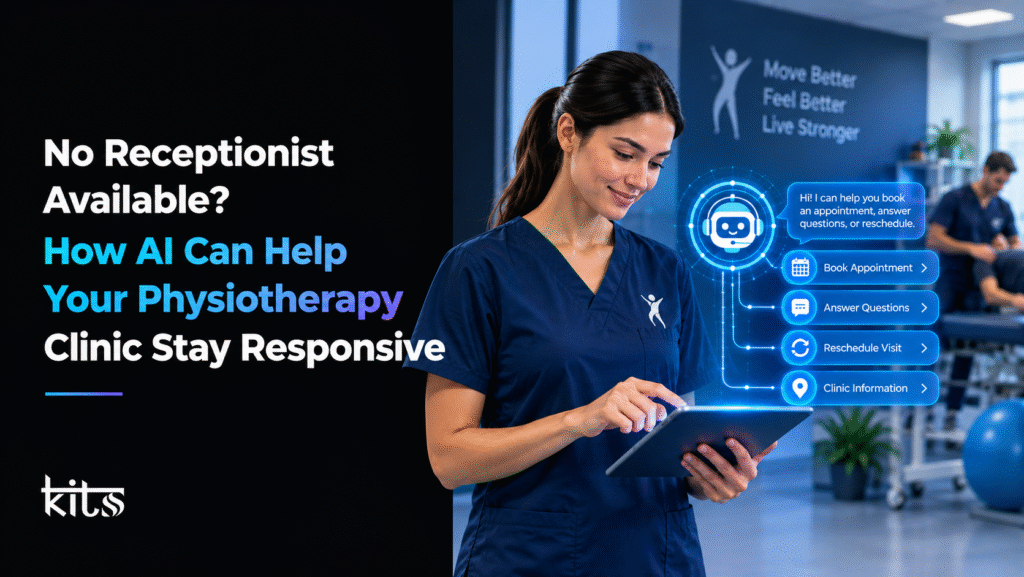
Running a physiotherapy clinic isn’t just about keeping track of appointments. Patients come in for multiple sessions, they have rehab plans, and their progress needs checking all the time.
For anyone managing the front desk, that creates a steady stream of calls, messages, and reminders. New patients want info, regulars need their appointments shuffled around, cancellations have to be filled, and sometimes people need a nudge to book their next session.
Let’s be real handling all this by hand gets overwhelming as the clinic grows.
Of course, having a receptionist helps, but not every clinic can afford it full-time. Even if you do have admin staff, things slip through the cracks during busy hours or after closing. That’s where an AI receptionist steps in.
AI can connect with your calendar, messaging tools, and CRM. It handles the routine stuff calls, appointment requests, reminders so your team can focus on the clinical side of things.
Why Good Communication Matters in Physiotherapy Clinics
Unlike shops or restaurants, where a customer’s interaction ends after one visit, physiotherapy is built on ongoing relationships. Someone books their first assessment, comes back for treatments, and later returns for follow-ups. Schedules shift all the time depending on jobs, recovery, or instructions from their therapist.
So, clinics have to manage communication at many points:
New patient enquiries: People want to understand the clinic’s services, location, availability and booking process.
Initial assessments: New patients need to arrange their first appointment and receive relevant booking information.
Recurring visits: Patients attending regular sessions need their upcoming appointments managed correctly.
Cancellations and rescheduling: Changes need to be communicated and appointment slots updated.
Missed appointments: Staff may need to contact patients and clarify whether they intend to rebook.
Ongoing patient engagement: Administrative reminders can help patients stay informed about upcoming appointments and outstanding bookings.
When all these tasks rely on phone calls and manual messages, the workload can balloon fast.
AI receptionists can help clinics stay organized, freeing staff from repetitive work without taking over clinical conversations.
6 Ways AI Receptionists Help Physiotherapy Clinics
1. Handling Calls From New Patients
First impressions matter. When someone calls for the first time, they’re curious about your services, where you’re located, available times, and how to book. An AI receptionist can answer basic, approved questions, grab their contact info, and help them start the booking process.
Let’s say someone says, “I’d like to schedule an assessment.” The AI takes their name, asks about timing, checks your calendar, and guides them through the next steps. Any questions about treatment or symptoms are shifted to your staff.
2. Catching Missed Calls and Unanswered Messages
Missing calls isn’t just about losing new clients—existing patients need stuff too. If nobody picks up, an automated system can jump in and send a quick text or WhatsApp response: “Thanks for calling. Want us to reach back out or help with booking?” That way, patients don’t have to keep dialing, and your staff can see which questions are still waiting for attention.
3. Making Recurring Appointments Less of a Headache
Regular appointments are the backbone of many rehab plans. Patients often come once a week, or even more. Keeping all these straight demands precise scheduling. AI can confirm upcoming appointments, send reminders, update bookings, and offer new time slots. If someone needs to move their Thursday session, they can do it through an AI link or system—no need for endless phone ping-pong. The trick is to integrate automation with your existing calendar rather than have a separate booking system.
4. Automating Reminders and Preventing No-Shows
Missed appointments throw clinic schedules out of whack. Patients forget dates, don’t see confirmation texts, or get busy at the last minute.
A reminder workflow might include:
| Timing | Automated communication |
|---|---|
| After booking | Appointment confirmation |
| 24–48 hours before | Appointment reminder |
| On the appointment day | Optional reminder |
| When a patient requests a change | Rescheduling confirmation |
| After a cancellation | Updated booking information |
Automated reminders help confirmations after booking, then reminders 24–48 hours before, and even on the day, sent via whichever channel the patient prefers. Plus, if someone can’t make it, they can let you know easily, giving your staff a shot at filling that slot.
Automation won’t solve every no-show, but it makes reminders consistent and takes a load off your team.
5. Following Up on Cancellations and Outstanding Bookings
Just because a patient cancels doesn’t mean they’re done. Some need to reschedule, others are dealing with conflicts, or maybe they forgot to book again. An AI can track cancellations, set follow-up tasks, send reminders, and let staff step in when needed. This keeps your schedule full and prevents patients from slipping away.
All follow-up messages should respect patients’ preferences and leave medical decisions to qualified therapists.
6. Linking Everything Through a CRM
If phone calls, bookings, and reminders live in separate systems, staff can’t see the big picture. With a connected CRM, every interaction is logged, so your admin team knows who needs what and when. It shouldn’t replace clinical records it’s just there to keep admin work tidy and organized.
How AI Works With Your Clinic Staff
AI reception automation works best alongside your current team. It’s not about replacing the human staff it’s about reducing routine admin work and stepping in when nobody’s available.
Consider a typical workflow:
Step 1: Incoming enquiry
An AI voice agent answers a call and identifies whether the caller needs general clinic information, an appointment request or assistance from a staff member.
Step 2: Information collection
It collects only the information needed for the administrative task and records the enquiry securely.
Step 3: Appointment assistance
If connected to the clinic’s scheduling system, it can help with available appointment options and booking requests.
Step 4: Automated communication
The system sends appropriate confirmations, reminders or follow-up messages through the clinic’s approved communication channels.
Step 5: Staff involvement
Complex requests, complaints, clinical questions and situations requiring human judgement are escalated to the appropriate clinic staff.
This approach allows the clinic to maintain a human-led patient experience while using automation to improve administrative coordination.
AI Receptionist or Human Receptionist-What’s Best for Your Clinic?
An AI receptionist and a human receptionist have different strengths.
| Responsibility | Human receptionist | AI receptionist |
|---|---|---|
| Personal patient assistance | Strong | Limited |
| Routine incoming calls | Yes | Yes |
| After-hours call handling | Depends on staffing | Can operate 24/7 |
| Appointment reminders | Can manage manually | Can automate |
| Booking calendar integration | Depends on system | Available through integration |
| Handling complex requests | Can assess and escalate | Should escalate |
| Clinical judgement | Only within professional qualifications and role | Not appropriate |
For many physiotherapy clinics, a combined approach is more practical.
AI can support routine calls, appointment requests, and reminders, leaving receptionists and qualified healthcare professionals to handle personal assistance and matters requiring human judgement.
What to Think About Before Adding AI Reception Automation
Patient info is sensitive, so it’s important to roll out automation carefully:
1. Patient privacy and data protection
Choose systems that support appropriate security, access controls, data handling and consent requirements under the privacy laws applicable to your clinic.
2. Clear clinical boundaries
The AI should not diagnose conditions, recommend exercises, interpret symptoms or make treatment decisions.
3. Accurate appointment availability
Booking integrations must use the clinic’s actual calendar and follow its scheduling rules.
4. Human escalation
Patients should have a clear way to reach clinic staff when their enquiry requires personal assistance.
5. Integration with existing systems
Check whether the solution can work with your current booking software, CRM and communication channels without creating duplicate records or conflicting appointment information.
6. Appropriate patient communication
Messages should be relevant, professional and consistent with the patient’s communication preferences and the clinic’s policies.
How KITSS Helps Physiotherapy Clinics Manage Calls and Patient Appointments
A physiotherapy clinic needs a communication system that supports its day-to-day operations, from handling first-time enquiries to managing recurring appointments and administrative follow-ups.
At KITSS, we help businesses implement AI-powered communication and automation systems that reduce repetitive administrative work and make customer interactions easier to manage.
For physiotherapy and rehabilitation clinics, we can help build workflows around several important areas:
AI Voice Agents for Incoming Calls
An AI voice agent can answer routine incoming calls, provide approved clinic information, capture caller details and help patients with appointment enquiries. It can also be configured to transfer calls to clinic staff when human assistance is required.
Missed-Call Recovery
When your team cannot answer an incoming call, an automated SMS or WhatsApp response can help reconnect with the caller. The workflow can collect callback requests, record enquiries and notify the appropriate team member.
Appointment Booking and Calendar Integration
We can help connect supported appointment calendars with communication workflows so patients can request available time slots, receive booking confirmations and manage appointment changes through an organised process.
Automated Appointment Reminders
Instead of manually contacting every patient, clinics can use automated SMS, email or WhatsApp reminders to share upcoming appointment details and rescheduling options.
CRM and Administrative Follow-Ups
With CRM automation, clinics can organise new enquiries, missed calls, pending callbacks, cancellations and outstanding booking requests. This gives administrative staff better visibility into tasks that still need attention.
Connected Communication Workflows
The real benefit comes when these systems work together, integrating calls, appointment requests, reminders, and follow-up tasks into one connected administrative process rather than a series of separate, manually managed activities.
Building on this, KITSS helps physiotherapy clinics automate their existing operations; the goal is to improve responsiveness and reduce administrative workload while ensuring clinical care and patient decisions remain under qualified professional supervision.
Explore our AI Voice Agent solutions to understand how AI-powered call handling can support your clinic.
Final Thoughts
A physiotherapy clinic needs more than a calendarit needs solid communication at every step, from first contact to follow-up sessions. AI receptionists can make things smoother, handling routine calls, booking help, reminders, and making sure nothing slips through the cracks.
They’re not here to replace therapists or real human attention. Instead, they’re a tool that helps your staff spend more time on what matters: giving patients the best care possible.
Frequently Asked Questions
1. What is an AI receptionist for a physiotherapy clinic?
An AI receptionist is a voice-based system that answers incoming calls, responds to approved administrative enquiries, collects caller information and helps patients with appointment requests. It can also support after-hours communication when clinic staff are unavailable.
2. Can an AI receptionist book physiotherapy appointments?
Yes. When integrated with a clinic’s appointment calendar, an AI receptionist can check available time slots, help patients request appointments and confirm bookings once the scheduling system successfully updates. It can also direct patients to an online booking link.
3. How can physiotherapy clinics recover missed calls using AI?
Clinics can use AI voice agents and missed-call automation to respond to unanswered calls. The system can send an SMS or WhatsApp message, offer a callback option, collect basic enquiry details and notify the administrative team.
4. Can AI manage recurring physiotherapy appointments?
AI-powered workflows can support recurring appointment administration by sending reminders, confirming upcoming visits and helping patients request rescheduling. The clinic’s actual scheduling system should remain the source of truth for appointment availability.
5. Can an AI receptionist reduce missed appointments in physiotherapy clinics?
Automated appointment confirmations and timely reminders can help patients remember scheduled visits. Easy rescheduling options can also help clinics manage cancellations earlier. However, automation cannot guarantee that every patient will attend.
6. Can an AI receptionist answer patient questions about injuries or treatment?
An AI receptionist should only provide clinic-approved general administrative information. It should not diagnose injuries, recommend exercises, interpret symptoms or suggest treatment. Clinical questions must be directed to a qualified physiotherapist.
7. Can AI receptionists work outside physiotherapy clinic hours?
Yes. An AI receptionist can be configured to answer calls outside regular business hours, provide approved clinic information, capture enquiries and help patients request appointments. This allows clinics to maintain a communication channel even when reception staff are unavailable.
8. Is an AI receptionist suitable for small physiotherapy clinics?
Yes. Smaller practices may benefit from AI reception automation because they may not have dedicated reception coverage throughout the day. The system can support routine calls, booking requests and reminders without requiring additional full-time reception staff.
9. Can AI connect with a physiotherapy clinic’s existing CRM and booking software?
This depends on the software and available integrations. Compatible systems can connect AI voice agents, booking calendars, CRM platforms and messaging services to create a more organised administrative workflow.
10. How can KITSS help physiotherapy clinics implement AI reception automation?
KITSS can help clinics implement AI voice agents, missed-call responses, appointment booking integrations, automated reminders and CRM follow-up workflows. The setup can be tailored to the clinic’s existing administrative process, scheduling system and communication requirements.