
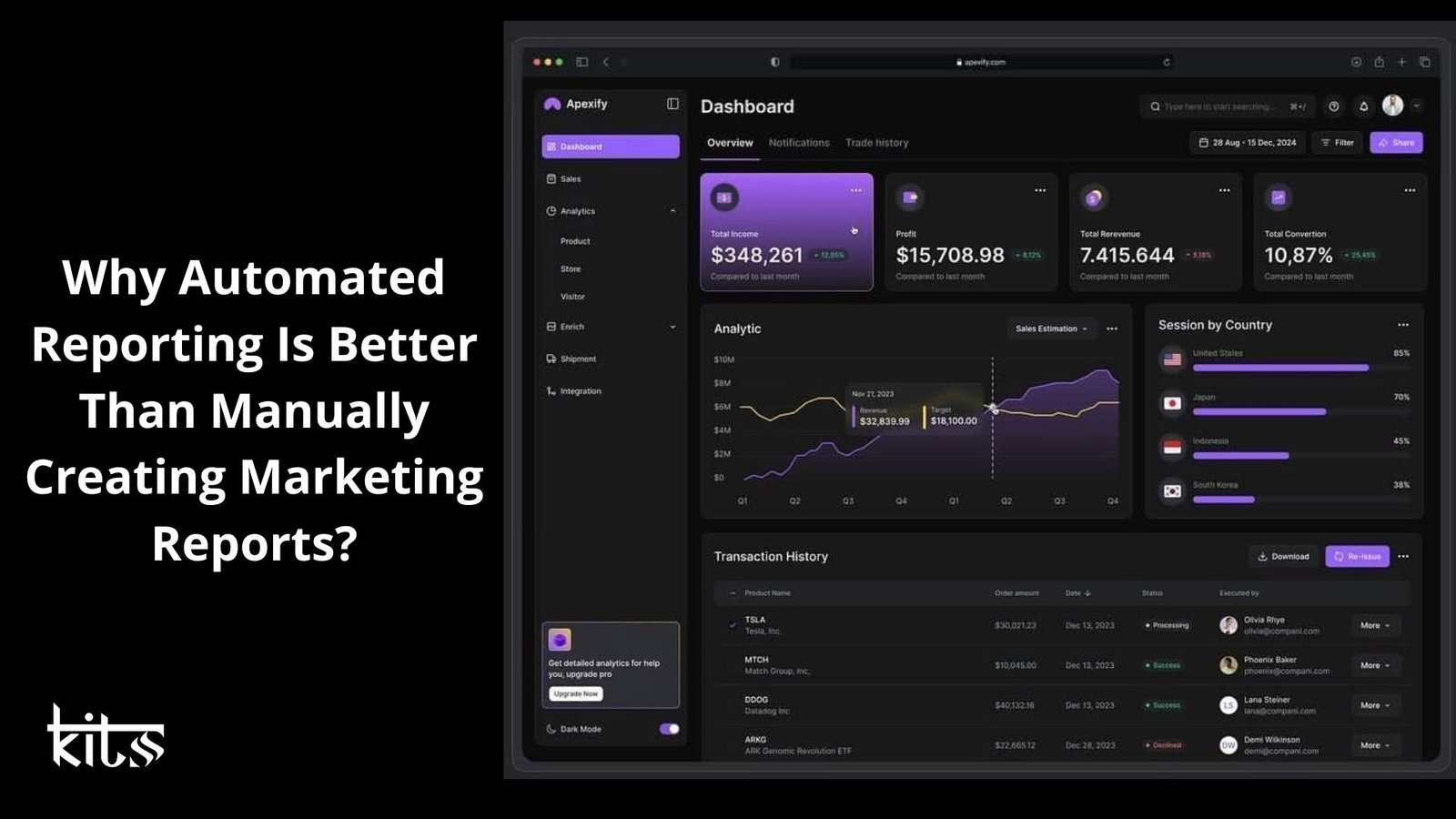
Why Automated Reporting Is Better Than Manually Creating Marketing Reports?
Marketing performance data is essential for making smart business decisions. However, many businesses still spend hours every week manually collecting data from Google Ads, Meta Ads, Google Analytics, CRM platforms, SEO tools, and spreadsheets. This process is time-consuming, difficult to maintain, and vulnerable to human error.
Automated marketing reporting offers a better solution. With marketing dashboards and automated reporting systems, businesses can bring important performance data into one place, monitor key metrics, and make faster decisions without repeatedly creating reports manually.
For growing businesses, working with a digital marketing agency that provides automated reporting can also make it easier to understand marketing performance and identify opportunities for growth.
What Is Automated Marketing Reporting?
Automated marketing reporting uses technology to collect, organize, and display marketing data without requiring someone to manually prepare every report.
Instead of downloading data from multiple platforms and copying it into spreadsheets, businesses can use marketing reporting dashboards to automatically update important metrics.
For example, a customized dashboard can show:
- Website traffic and conversions
- Leads generated
- Cost per lead
- Advertising spend
- Return on ad spend (ROAS)
- Conversion rates
- SEO performance
- Sales and revenue
- Customer acquisition cost
This gives business owners and marketing teams a centralized view of performance.
1. Automated Reporting Saves Time
One of the biggest advantages of automated reporting is time savings.
Manual reporting often requires marketers to export data, clean spreadsheets, calculate metrics, create charts, and prepare presentations. Depending on the number of marketing channels, this process can take several hours every week.
With marketing dashboards, data can be pulled into a centralized system automatically. This allows marketing teams to spend less time preparing reports and more time analyzing results and improving campaigns.
Instead of asking, “How long will it take to prepare this month’s report?” teams can focus on a more valuable question: “What should we do next based on the data?”
2. Reduce Human Errors
Manual data entry creates opportunities for mistakes. A wrong formula, incorrect date range, or misplaced number can make a marketing report misleading.
Automated marketing reporting dashboards reduce these risks by using predefined data connections and calculations.
When the same KPIs are automatically updated using consistent rules, businesses can have greater confidence in the information they are using to make decisions.
3. Get Real-Time Marketing Insights
Traditional marketing reports often show what happened last week or last month. While historical reporting is useful, business owners also need to know what is happening now.
Automated dashboards can provide frequently updated information about campaign performance, leads, conversions, and other important KPIs.
This allows businesses to quickly identify problems.
For example, if the cost per lead suddenly increases, a business owner can investigate the campaign before wasting a significant portion of the advertising budget.
4. Bring Data From Multiple Channels Together
Modern businesses often use several marketing platforms at the same time. Data may be spread across Google Ads, Meta Ads, Google Analytics, CRM software, SEO platforms, and email marketing tools.
Looking at each platform separately makes it difficult to understand the complete customer journey.
A customized marketing dashboard can bring relevant information together, making it easier to compare channels and understand which activities are contributing to business growth.
5. Make Better Business Decisions
The purpose of marketing reporting isn’t simply to create attractive charts. The real goal is to support better decisions.
Effective marketing dashboards help business owners answer questions such as:
- Which marketing channel generates the most qualified leads?
- How much are we spending to acquire a customer?
- Which campaigns generate the highest return?
- Are website visitors converting into leads?
- Is our marketing budget producing measurable revenue?
When these answers are available in one place, businesses can make decisions based on data rather than assumptions.
6. Improve Collaboration With Your Digital Marketing Agency
Automated reporting is especially useful when working with a digital marketing agency.
Instead of waiting for a monthly report, clients and agencies can use shared dashboards to monitor important KPIs and discuss performance using the same data.
This creates greater transparency and makes marketing conversations more productive. Agencies can focus on explaining what the data means, what is working, and what should be optimized next.
Automated Reporting vs. Manual Reporting
| Automated Reporting | Manual Reporting |
|---|---|
| Saves time | Requires repetitive work |
| Updates automatically | Requires regular data collection |
| Reduces human error | More prone to mistakes |
| Centralizes marketing data | Data is often spread across files |
| Supports faster decisions | Insights may arrive late |
| Easy to customize | Often uses fixed templates |
Conclusion
Manual marketing reports may work for small amounts of data, but they become inefficient as a business grows. Automated marketing reporting dashboards provide a more efficient way to monitor marketing performance, combine data from multiple channels, and identify opportunities quickly.
Whether you manage marketing internally or work with a digital marketing agency, customized marketing dashboards can turn scattered data into actionable business insights.
The goal isn’t simply to create reports faster. It’s to give business owners the information they need to understand performance, improve marketing ROI, and make better growth decisions.