
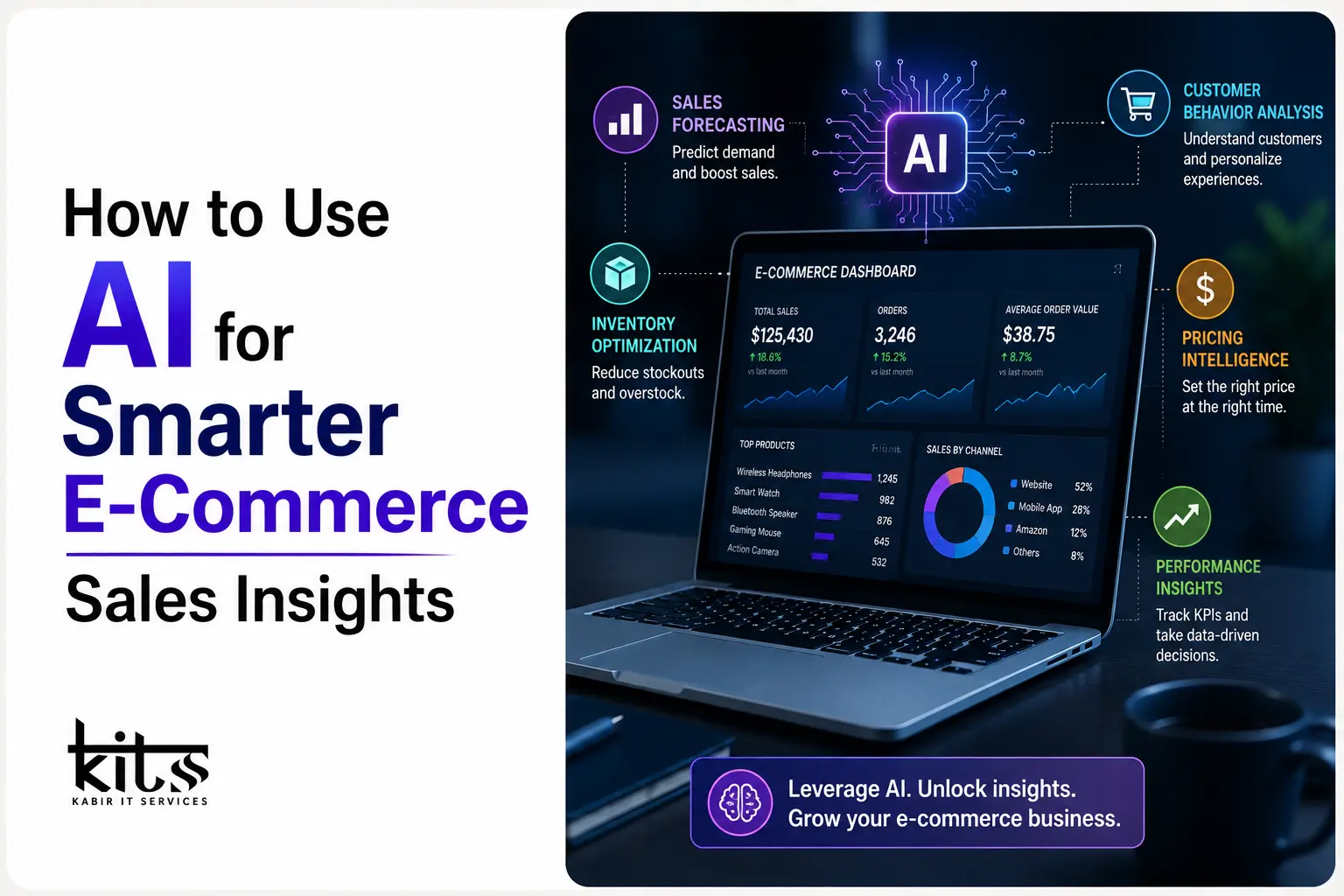
How to Use AI for Smarter E-Commerce Sales Insights
In today’s digital marketplace, data is everywhere. E-Commerce platforms generate gigabytes of information every single day, tracking everything from click-through rates and cart abandonment to seasonal trends and customer lifetime value. However, having access to data is no longer a competitive advantage-knowing what to do with it is.
Traditional analytics tools tell you what happened: sales dropped by 10% last week, or a specific product line performed exceptionally well over the weekend. But they rarely tell you why it happened or what you should do next. This is where Artificial Intelligence (AI) transforms e-commerce operations. By shifting your approach from reactive reporting to proactive, AI-driven strategy, you can turn overwhelming streams of raw metrics into actionable, revenue-generating sales insights.
Here is a practical guide on how to leverage AI to unlock smarter sales insights and grow your e-commerce business.
1. Move from Descriptive to Predictive Analytics
Traditional e-commerce dashboards focus on descriptive analytics—reporting past performance. AI elevates this process through predictive analytics, using historical data and machine learning algorithms to forecast future customer behavior and market conditions.
Demand Forecasting and Inventory Optimization
Overstocking ties up capital and increases storage costs, while understocking leads to missed sales and dissatisfied customers. AI models analyze historical sales patterns, local weather forecasts, economic indicators, and seasonal trends to predict demand with high accuracy.
- Actionable Insight: AI can alert you two months in advance that a specific product variant will likely spike in demand, allowing you to optimize purchase orders and avoid stockouts.
Customer Lifetime Value (CLV) Prediction
Not all customers yield equal value over time. AI algorithms evaluate early purchase behaviors, browsing frequency, and engagement metrics to predict a customer’s long-term financial value.
- Actionable Insight: Identify high-value customer segments early in their journey so you can allocate higher ad spend toward acquiring similar profiles.
2. Personalize the Customer Journey at Scale
Personalization is no longer limited to addressing a customer by their first name in an email. AI enables hyper-personalized shopping experiences by analyzing real-time clickstream data, browsing history, and purchase habits.
Dynamic Recommendation Engines
AI recommendation algorithms go beyond simple “customers who bought this also bought that” logic. They analyze real-time context—such as time of day, device type, referral source, and active session behavior—to suggest products the customer is most likely to buy right now.
- Actionable Insight: Implementing AI-driven product recommendations directly on cart pages frequently boosts Average Order Value (AOV) by 15% to 30%.
Dynamic Pricing Strategies
AI pricing tools continuously evaluate competitor pricing, demand fluctuations, inventory levels, and customer price sensitivity to adjust product prices in real time.
- Actionable Insight: Maximize profit margins during peak demand periods and automatically drop prices slightly to clear slow-moving inventory without manual intervention.
3. Master Customer Sentiment and Behavioral Intelligence
Surveys and direct feedback represent only a tiny fraction of customer opinions. AI allows you to harvest insights from every customer touchpoint, including social media comments, product reviews, support chats, and return notes.
Natural Language Processing (NLP) for Reviews and Tickets
By applying NLP to product reviews and customer support interactions, AI categorizes customer sentiment at scale. It identifies recurring complaints, missing features, or sizing issues that might be dragging down conversion rates.
- Actionable Insight: If NLP flags that 20% of return reasons for a footwear line mention “runs small,” you can immediately update the product page sizing guide to reduce return rates.
Visual and Intent-Based Analytics
AI heatmaps and session replay analyzers go beyond basic bounce rates. They detect patterns in user frustration—such as “rage clicks” or abrupt exit points on payment pages—identifying underlying user interface (UI) issues before they severely impact overall conversion rates.
4. Tackle Cart Abandonment with Targeted Interventions
Cart abandonment remains one of the largest revenue leaks in e-commerce, averaging nearly 70% across industries. Machine learning transforms how retailers approach this problem by moving from blanket follow-up emails to hyper-targeted interventions.
Predicting Intent to Exit
AI models monitor micro-movements, such as rapid cursor shifts toward the close button or extended pauses on shipping fee calculations.
- Actionable Insight: Trigger targeted, intent-based overlays—such as free shipping thresholds or limited-time incentives—specifically for users with a high probability of abandoning their cart.
Hyper-Segmented Recovery Campaigns
Instead of sending a generic “You left something behind” email to everyone, AI analyzes why a specific user likely left. Was it the price? Lack of trust? Distraction?
- Actionable Insight: Automatically tailor recovery messaging. A price-sensitive customer might receive a small discount offer, while a research-focused buyer receives additional product reviews and trust badges.
5. Implement AI-Driven Sales Attribution
Determining which marketing channels actually drive sales is notoriously difficult in multi-channel e-commerce setups. Traditional models like “First-Touch” or “Last-Touch” attribution give an incomplete picture of the customer journey.
Multi-Touch Data-Driven Attribution
AI evaluates every customer interaction across social media ads, email campaigns, organic search, and retargeting banners to distribute conversion credit accurately based on actual influence.
- Actionable Insight: Discover which mid-funnel content channels actually nurture leads toward a purchase, preventing you from prematurely cutting budget on channels that appear unprofitable under legacy attribution models.
How to Get Started with AI Analytics Today
Transitioning to AI-driven sales insights doesn’t require building a proprietary system from scratch. Here is a clear roadmap to start integrating AI into your store:
- Audit Your Data: AI is only as good as the data fed into it. Ensure your analytics setup, CRM data, and transaction logs are clean, complete, and properly integrated.
- Leverage Native Platform Tools: Popular e-commerce platforms (like Shopify, WooCommerce, and BigCommerce) feature built-in AI analytics tools and app integrations for predictive search, recommendations, and churn prevention.
- Focus on One Specific Metric First: Avoid trying to revolutionize your entire stack overnight. Start by tackling a clear objective—such as reducing cart abandonment or improving inventory demand forecasts.
- Combine AI Insights with Human Strategy: AI provides recommendations and patterns, but human expertise is essential for creative execution, brand messaging, and overarching business policy.
By transforming raw e-commerce metrics into predictive intelligence, AI allows store owners to stop guessing and start making data-backed decisions. Whether you are aiming to increase average order values, reduce customer acquisition costs, or optimize inventory efficiency, incorporating AI into your analytics routine provides the clarity needed to scale sustainably.